Overview
Laser hair removal uses concentrated pulses of light to heat and disable hair follicles beneath the skin, so that fewer hairs grow back — and the ones that do are typically finer and lighter. It works on almost any area of the face or body, from the upper lip and underarms to the legs, back and bikini line.
The accurate term is long-term hair reduction rather than permanent removal. Over a full course of treatment most clients see a significant, lasting drop in hair growth, with occasional touch-ups to keep results where they want them. For many people it means far less shaving, no more waxing appointments, and relief from ingrown hairs and razor irritation.
How it works
Laser hair removal is based on a principle called selective photothermolysis: choosing a wavelength of light that is absorbed by one specific target while largely passing through the tissue around it. Here, the target is melanin — the pigment that gives hair its color.
- Light is absorbed by the hairThe pulse travels through the skin and is absorbed by the pigment in the hair shaft and bulb, which converts that light into heat.
- Heat reaches the follicleThe heat spreads to the surrounding follicle and the stem cells that drive regrowth, damaging their ability to produce a new hair.
- The skin is protectedPulse duration is kept short and the skin is cooled before, during and after each pulse, so the surface stays comfortable while the follicle absorbs the energy.
- Treated hairs shedOver the following 1–3 weeks, treated hairs loosen and fall out on their own.
Why you need a series: the hair growth cycle
Every hair cycles through three phases: anagen (active growth), catagen (transition) and telogen (rest). The laser is only effective during anagen, when the hair is still attached to the pigment-rich bulb that carries heat down to the follicle. At any given time only a portion of your hairs are in that phase, so each session catches a different group. That is why treatments are spaced 4–8 weeks apart — timed to catch the next wave of growing hairs — and why a course of 6–8 or more sessions is normal.
Benefits & treatment areas
- Long-term hair reduction — fewer, finer, lighter hairs after a full course.
- Fewer ingrown hairs — a common reason clients start, especially on the bikini line, neck and legs.
- Less razor irritation — reduced shaving means fewer bumps and less redness.
- Quick, targeted sessions — small areas like the upper lip or underarms take only minutes.
- Comfortable cooling — integrated cooling keeps the skin comfortable throughout.
- Minimal downtime — most people return to their day immediately.
Popular areas include the upper lip, chin, jawline, underarms, arms, bikini line, legs, chest, abdomen and back.
Who it’s best for
The ideal candidate has dark hair, because pigment is what the laser targets. Skin tone matters too: the more melanin in the skin, the more the skin competes with the hair for the laser’s energy, which raises the risk of burns or pigment changes. Settings, pulse duration and cooling are adjusted for your skin, and a patch test may be recommended so we can confirm how your skin responds before a full session.
Great fit
- Dark brown or black hair
- Clients tired of shaving, waxing or ingrown hairs
- Anyone with razor bumps or irritation
- People who can commit to a series of visits
- Untanned skin at the time of treatment
Set expectations
- Blond, red, gray and white hair respond poorly or not at all
- Hormonally driven growth (e.g. PCOS) may need more sessions and ongoing touch-ups
- Deeper skin tones need conservative settings — suitability is confirmed at consultation
- Results are a reduction, not a guarantee of zero hair
Who should wait or avoid it
Your consultation includes a health and skin review. Laser hair removal is not recommended if you have:
- A recent tan, sunburn or self-tanner on the treatment area
- Pregnancy
- Taken isotretinoin (Accutane) in the last 6 months
- Recently started photosensitizing medications (certain antibiotics, acne treatments or other drugs) — please list all medications at your consultation
- Active infection, open wounds, cold sores, eczema or psoriasis in the area
- A history of keloid scarring or a known light-sensitive condition
- Tattoos or permanent makeup in the treatment area (these are avoided, as ink absorbs laser energy)
- Moles or unusual spots in the area that haven’t been checked by a dermatologist
What to expect
Before your appointment
- Shave the area 12–24 hours before. The hair should be below the surface but the follicle intact.
- Do not wax, pluck, thread or use epilators for 4–6 weeks before — these remove the hair from the follicle, leaving nothing for the laser to target.
- Avoid sun exposure, tanning beds and self-tanner for at least 2 weeks.
- Stop retinoids and exfoliating acids on the area a few days before.
- Arrive with clean skin — no lotion, deodorant or makeup on the treatment area.
During the treatment
- Consultation & skin checkWe review your hair, skin and health history, and may do a patch test first.
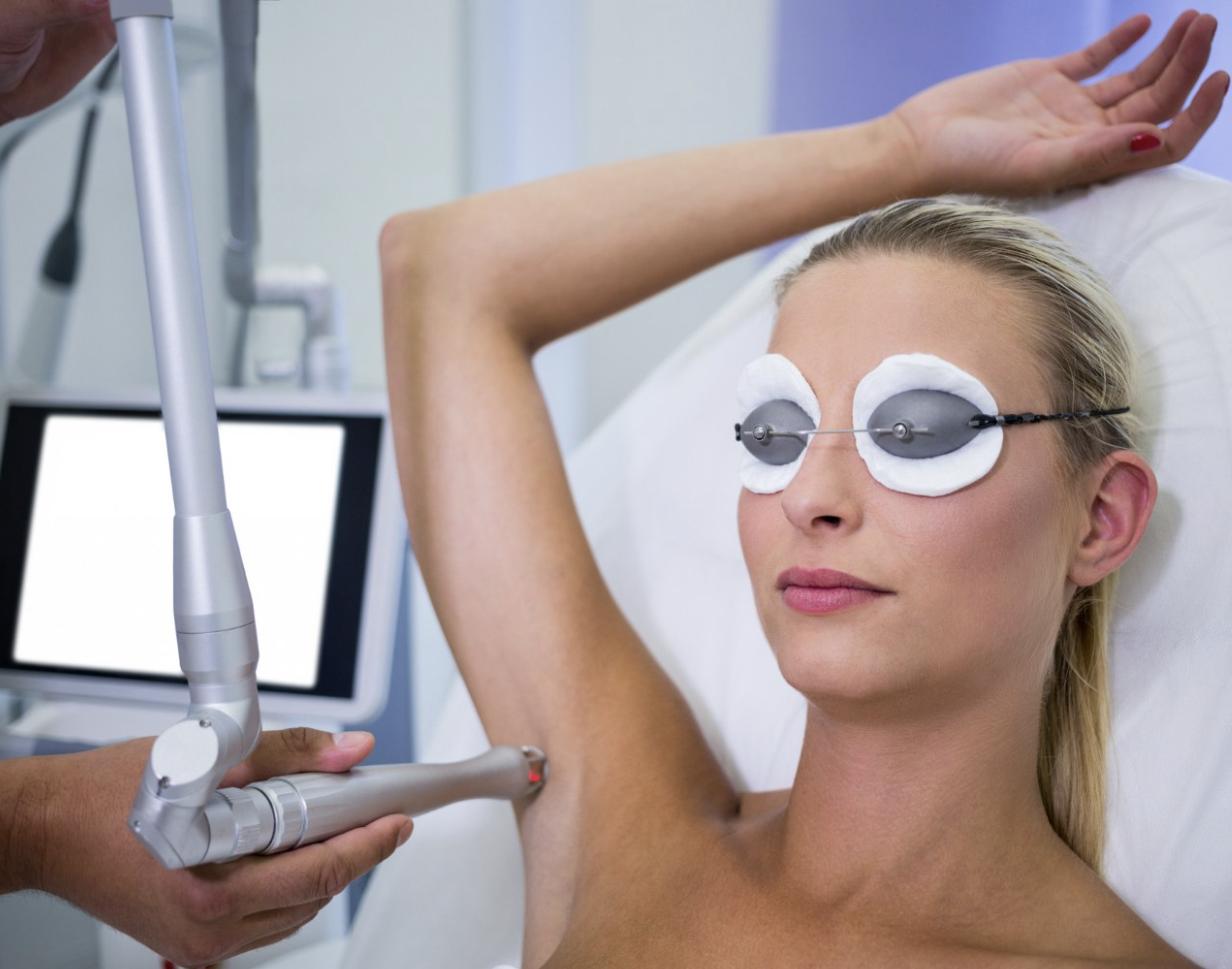
- PrepThe skin is cleansed, any missed hairs are trimmed, and protective eyewear goes on.
- TreatmentThe handpiece delivers quick pulses across the area. Most people describe it as a warm snap, like a rubber band, softened by the cooling.
- SootheA calming product is applied, and SPF on exposed areas.
Recovery timeline
Mild redness and small raised bumps around follicles, like a light sunburn.
Redness and bumps settle. Normal activities resume right away.
Treated hairs shed. This can look like regrowth at first — it isn’t.
A new wave of hair enters the growth phase; time for your next session.
Results & number of sessions
Most clients notice thinner, patchier regrowth after the first two or three sessions, with results building steadily across the course. How many sessions you need depends on the area, your hair color and thickness, your skin tone and your hormones.
- Typical course: 6–8 or more sessions.
- Spacing: every 4–6 weeks for the face; every 6–8 weeks for most body areas.
- Maintenance: an occasional touch-up, often once or twice a year, for hairs that return over time.
Results are long-lasting for most people, but no laser can guarantee permanent removal of every hair. Hormonal shifts, medication changes and new follicles becoming active can bring some regrowth, which is usually finer and responds to touch-ups.
Aftercare
Do
- Apply a cool compress or aloe if the area feels warm
- Wear broad-spectrum SPF 30+ on treated areas
- Shave between sessions if you like
- Gently exfoliate after a few days to help shedding hairs release
Avoid for 24–48 hours
- Hot showers, saunas, hot tubs and heavy sweating
- Deodorant or fragranced products on freshly treated skin
- Sun exposure and tanning (throughout your course)
- Waxing, plucking or threading between sessions
Side effects
Expected effects are temporary redness, warmth and small bumps around the follicles, which usually fade within hours to a couple of days. Less common: temporary lightening or darkening of the skin (more likely with a tan or deeper skin tones), blistering, crusting or mild swelling. Burns and scarring are rare and are minimized by careful settings, proper cooling and avoiding sun before and after treatment. In uncommon cases, treatment can stimulate finer hair growth near the treated area (paradoxical hypertrichosis). Contact us if anything concerns you.
How it compares
| Method | How long it lasts | Best for |
|---|---|---|
| Laser Hair Removal | Long-term reduction after a series | Dark hair; ingrowns; frequent shavers |
| Waxing | 3–6 weeks per visit | All hair colors, including blond and gray |
| Dermaplaning | 3–4 weeks (facial peach fuzz) | Fine facial hair plus exfoliation and glow |
Waxing and laser don’t mix during a course: waxing removes the hair the laser needs. Switch to shaving once you start laser.
Pricing
| Treatment | Duration | Price |
|---|---|---|
| Laser Hair Removal | 30–60 min | By consultation |
Pricing depends on the treatment area and your plan. Ask about package pricing for a full series. Prices subject to change.
Frequently asked questions
Is laser hair removal permanent?
It provides long-term hair reduction rather than guaranteed permanent removal. Most clients see a significant, lasting decrease after a full course, with occasional touch-ups.
Does it hurt?
Most people describe a quick, warm snap similar to a rubber band. Cooling keeps it comfortable, and sensitive areas such as the bikini line or upper lip can feel a little more intense.
Why do I have to shave but not wax?
The laser needs the hair root in the follicle to carry heat down to it. Shaving leaves the root intact; waxing and plucking pull it out, so there’s nothing to target.
Will it work on blond, red or gray hair?
Usually not. Laser targets pigment, and light-colored hair doesn’t contain enough of it to absorb the energy. Waxing is a good alternative for these hair colors.
Can I have it done if I have darker skin?
Skin tone affects which settings are safe, because pigment in the skin also absorbs light. We assess your skin at consultation and may do a patch test to confirm treatment is appropriate for you.
Why is hair falling out a week or two later?
That’s the treated hair shedding — a normal and expected part of the process, not new growth.
Can I go in the sun during my course?
Avoid tanning and use SPF throughout. Tanned skin absorbs more laser energy, raising the risk of side effects, and may mean postponing a session.